Welcome to Religion of Comedy: Where Stand-Up is Sacred!

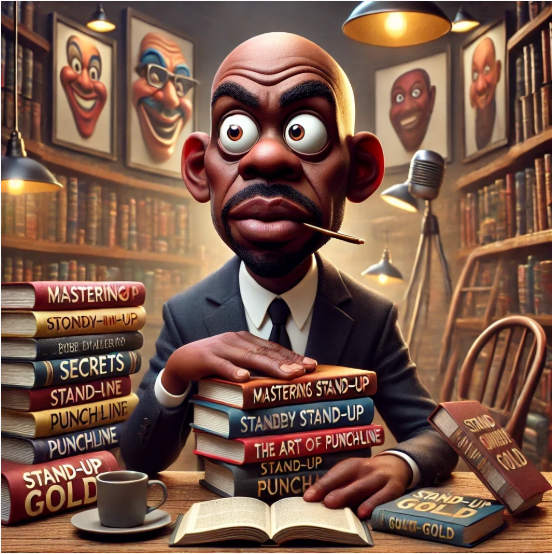
  • How listening to audiobooks can sharpen your Comedy, craft

    One thing I love about comedy is the books. Reading timely comedy books always gives me that
    creative urge I need — it keeps me sharp and inspired. The truth is, we can dive into a book at any
    time, but as comedians, we’re always on the go. Physical books can feel limiting when you’re bouncing
    from open mics to gigs to writing sessions. And since writing is something we have to do every day (or
    at least should be doing), reading usually ends up on the back burner. We tell ourselves we’ll get to it
    “later.” But here’s the thing — the best comedians are also the best readers. They study the craft. They
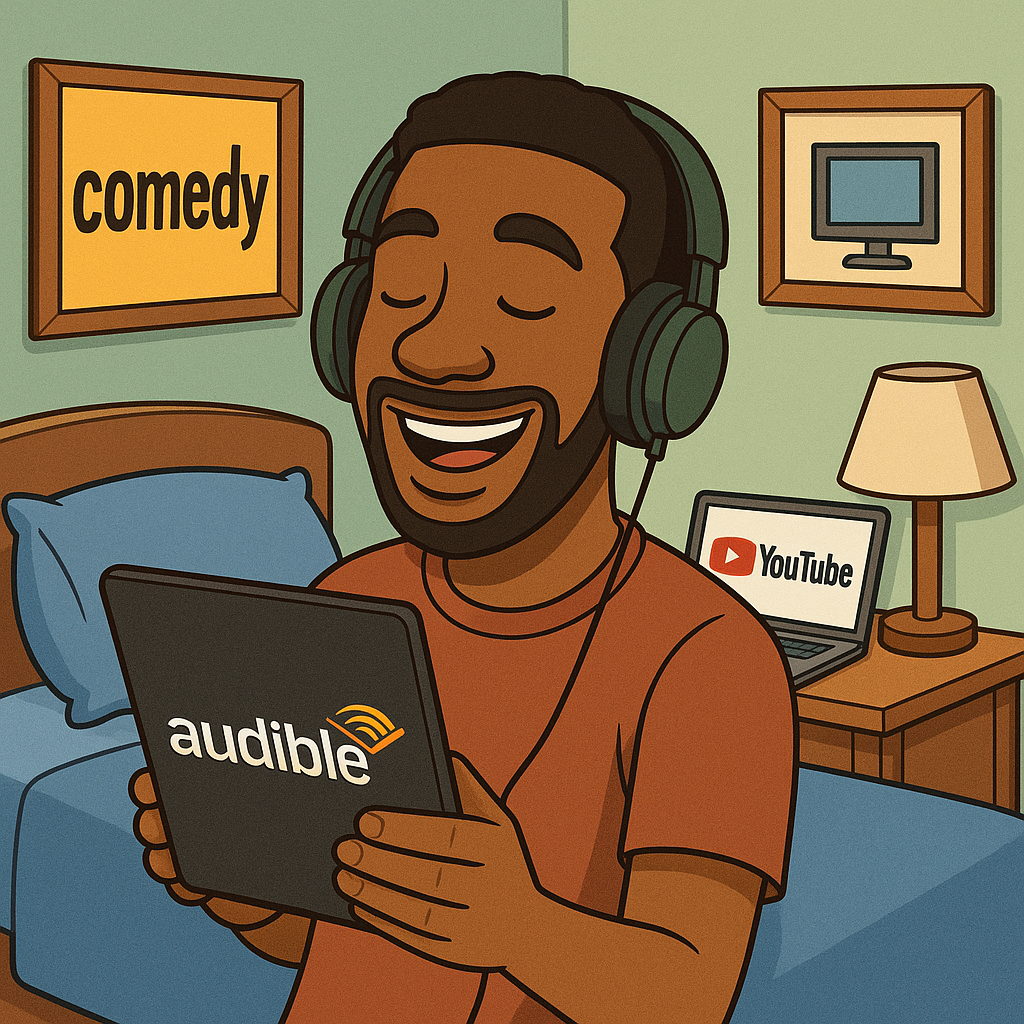
    feed their minds. That’s why I started using Audible. Now, don’t get me wrong — YouTube is still one of
    the greatest comedy classrooms out there. You can learn so much just by watching sets and
    interviews. But YouTube can only take you so far. Audible goes deeper. It gives you full access to the
    minds of some of the funniest and smartest comics ever to do it. I recommend listening to every
    stand-up comedy audiobook you can find — and not just once. Listen to each one at least ten times.
    That’s how you truly let the lessons sink in. Every time you re-listen, you catch something new — a
    hidden gem that didn’t hit the first time around. One of the best books I’ve listened to this year is Maria
    Bamford’s “You Are (A Comedy) Special: A Simple 15-Step Self-Help Guide to Forcibly Force Yourself
    to Write and Perform a Full Hour of Stand-Up Comedy.” I listen to it while driving. It’s hilarious, brutally
    honest, and full of real advice that will save you time, frustration, and self-doubt. That’s what books are
    for — to guide you, to recharge you, and to remind you why you do this. So yeah, picking up a physical
    book can be hard when life’s moving fast. But plug in those headphones, hit play on an audiobook, and
    keep growing in your comedy journey. Because the more you listen, the more you learn — and the
    sharper your punchlines get.
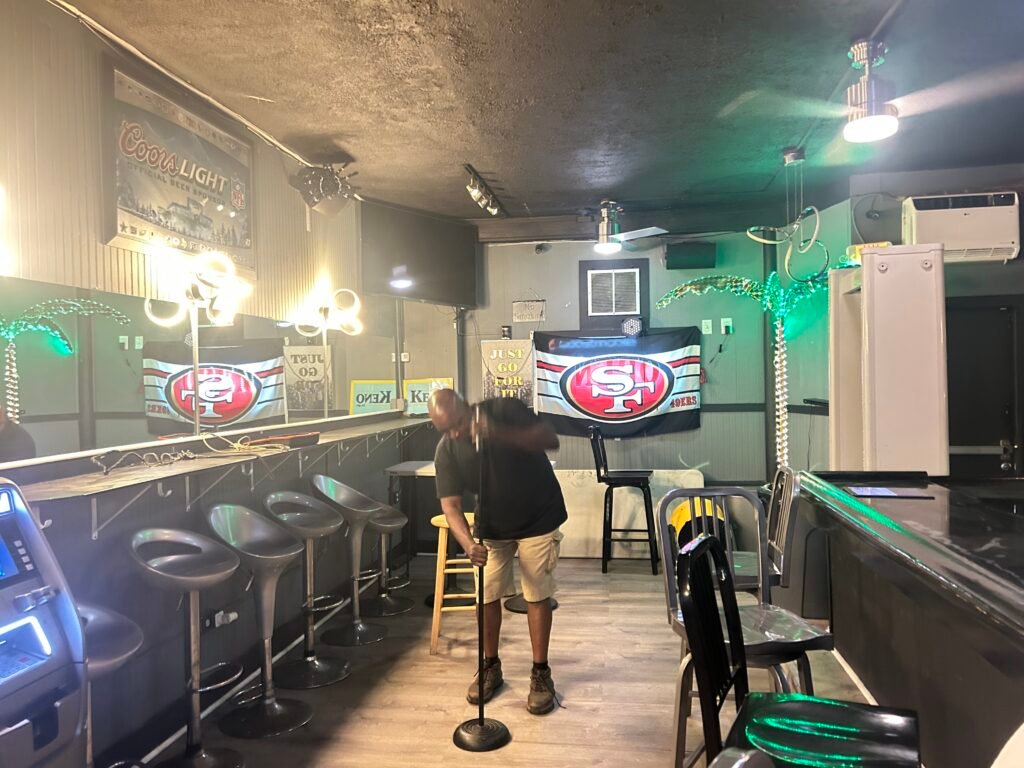
  • Why Every Comedian Should Originate their Own Open Mic Comedy Spot

    First things first — you’re still going to open mics, right? You’ve got your five minutes. Maybe you’ve even got a few different five-minute bits you rotate through. You keep showing up, keep practicing, and somewhere along the way you realize… you’re starting to run a little long.

    You’re comfortable on stage now. You’re getting the flashlight twice because you keep going over time. You know what that means?

    It’s time for you to start your own open mic.

    You’ve been flying around hitting mics — now it’s time to leave the nest and build your own.

    🏠 How to Build Your Own Comedy Nest

    Here’s how it works: every bar in America has one thing in common — Monday.
    Monday is the slowest day of the week for any bar. The vibe is empty, the owner’s half-bored, and the liquor bottles are just sitting there looking at each other like, “We might not make it tonight.”

    That’s your opportunity.

    Walk in with confidence and say:

    “Hey, my name’s [Your Name], and I’d love to bring people in here on a Monday night. I’m looking for a place to start a weekly stand-up comedy open mic.”

    That’s it. That’s your pitch.

    The bar owner (or whoever’s working) will listen — because nobody else is offering to fill their slowest night for free.

    Once comedians hear there’s a new mic, they’ll start coming through. Word spreads fast. Soon, you’ve got comics, crowds, and that beautiful snowball effect that builds a real comedy community.

    And the best part?
    Your startup cost: $0.

    Just ambition, a Bluetooth speaker, and a dream.

    🍸 Find Your Day — and Your Spot

    It doesn’t always have to be Monday. Most bars are dead Monday, Tuesday, or Wednesday. You could even find a quiet Sunday, or if you’re bold — find that one bar that’s somehow dead on a Friday and bring it to life.

    The rule is simple:
    You find a day.
    You find a place that serves liquor.
    You open up a comedy joint.
    And you start.

    Hey, you can try alternative comedy if you want — give it a shot. But let me tell you something: stick with what works.
    People are not coming out at night to sip on hazelnut coffee and “ponder life.” They want to laugh, drink, and forget about their job till tomorrow.

    Give the people what they came for.

    🎭 Pro Tip: Keep It a Comedy Mic

    If you’re going to run an open mic comedy night, please — just keep it open mic for comics.
    One of the quickest ways to piss off new comedians is to throw a banjo player right in the middle of a comedy lineup.

    This ain’t “America’s Got Talents.” It’s comedy night.
    Keep it laughs-only, and you’ll build something that comedians actually want to be a part of.

  • Funny Has No Age Limit: Starting a Comedy Career at Any Stage of Life

    Let’s be real: You’ve already had your wild years. You’ve been through some things. You’ve gotten your DUI, already been to rehab, maybe lost a couple of teeth in a fight you don’t even remember. You’ve seen life from the bottom, the top, and everywhere in between. So why not turn those war stories into punchlines?

    .

    Why Age is an Advantage in Comedy

    Many of the greatest comedians didn’t find success until later in life. Stand-up is about perspective, and the more years you’ve lived, the more stories you have to tell. Here’s why starting comedy at any age can be a powerful advantage:

    • More Life Experience: You have a lifetime of stories, observations, and wisdom to turn into jokes.
    • Stronger Stage Presence: You’ve faced real-life challenges—stage fright is nothing compared to raising kids, paying bills, or dealing with bad bosses.
    • Instant Relatability: Audiences love authenticity, and your experiences can connect with people on a deeper level.
    • You Know Yourself Better: Unlike younger comics still finding their voice, you already know who you are and what you stand for.

    Famous Comedians Who Started Later in Life

    If you need proof that it’s never too late, check out these comedians who made it big later in life:

    • Rodney Dangerfield – Didn’t hit mainstream success until his 40s.
    • Phyllis Diller – Started comedy at 37 while raising five kids.
    • Leslie Jones – Broke out on SNL at 47.
    • Ron Shock – Left a corporate job and started stand-up at 40.
    • Luenell – Took decades to become a household name.

    These comedians prove that age isn’t a barrier—it’s an asset.

    How to Get Started in Comedy at Any Age

    So, how do you begin your comedy journey? Follow these steps to get on stage and start making people laugh:

    1. Hit the Open Mics

    Find local comedy clubs, bars, or coffee shops hosting open mics. Start small, test your jokes, and build confidence.

    2. Write Every Day

    Comedy is about crafting the right words. Jot down funny observations, turn personal stories into punchlines, and experiment with different styles.

    3. Own Your Story

    You’ve survived things that could’ve taken you out, and that’s what makes you interesting. Turn your worst moments into your best material. That DUI? That time you had to Google ‘how long does it take to detox?’—it’s all part of the set now.

    4. Use Social Media

    Platforms like TikTok, Instagram, and YouTube give you a stage anytime, anywhere. Post clips, test material, and build an audience.

    5. Network with Other Comedians

    Comedy is a community. Connect with fellow comics, get feedback, and support each other.

    6. Be Patient and Have Fun

    Success in comedy takes time, but the journey itself is rewarding. Enjoy the process, embrace the awkward moments, and keep improving.

    Final Thoughts: The Mic is Always Open

    If you’ve ever thought, “I’d love to try stand-up, but I’m too old,” erase that thought immediately. The comedy world doesn’t care how many candles were on your last birthday cake—if you’re funny, you’re funny.

    You’ve already lived a hell of a life. You might as well get on stage and make some money off the trauma. Whether you’re 30, 50, or even 80, there’s always room for fresh voices and new perspectives.

    So grab that mic, tell your story, and prove that funny has no age limit.

    To be Continued

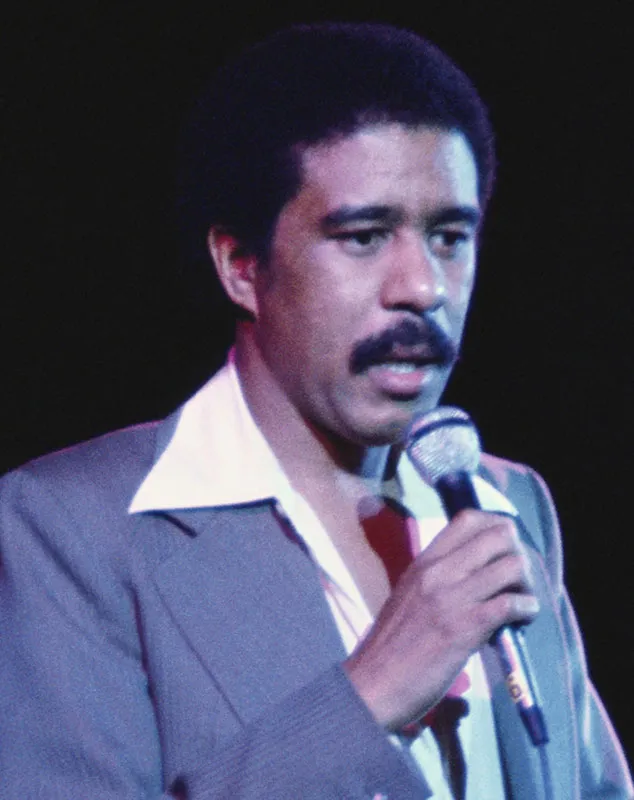
  • Richard Pryor’s Legacy: Lessons from the Master of Comedy

    If you want to understand comedy at its rawest, realest, and most revolutionary, look no further than Richard Pryor. These three books—Jokes My Father Never Taught Me by Rain Pryor, Becoming Richard Pryor by Scott Saul, and Pryor Convictions: And Other Life Sentences by Richard Pryor himself—dive deep into the life and legacy of one of the greatest comedians to ever hold a mic. Rain Pryor gives us a personal, behind-the-scenes look at growing up with a father who changed the comedy game forever, while Scott Saul takes a deep dive into how Pryor’s struggles, triumphs, and fearless storytelling shaped stand-up as we know it today. And in Pryor Convictions, the legend himself tells his own story—raw, hilarious, and unfiltered. If you’re a comedian looking to learn from the best—or just a fan of comedy history—these books belong on your shelf.

  • The Perfect Comedy Pair: Why You Need Both of Judy Carter’s Books

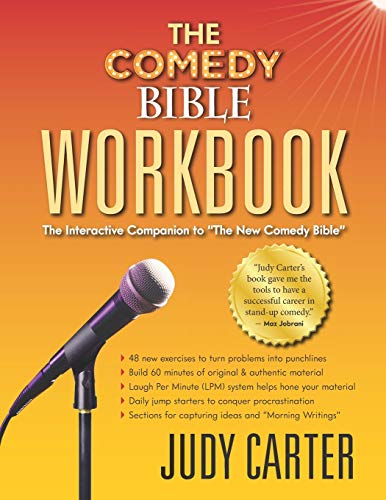
    Comedy is an art, but it’s also a science. And like peanut butter and jelly, two essential ingredients work best when they’re together—The Comedy Bible and Stand-Up Comedy: The Book by Judy Carter. These books aren’t just great on their own; they complement each other perfectly, giving you everything you need to become a killer comedian.

    Why You Need Both Books

    Start Writing with The Comedy Bible!
    Master Your Performance with Stand-Up Comedy: The Book!

    1. One Teaches You How to Write, the Other Teaches You How to Perform
      • The Comedy Bible is your comedy playbook, teaching you the structure of jokes, the mechanics of humor, and how to craft material that actually gets laughs.
      • Stand-Up Comedy: The Book takes those jokes and helps you deliver them with confidence, teaching you about timing, stage presence, and audience engagement.
    2. They Guide You From Beginner to Pro
      • Start with The Comedy Bible to master joke writing and understand the psychology behind what makes people laugh.
      • Then, use Stand-Up Comedy: The Book to refine your performance skills and learn how to own the stage like a pro.
    3. They Prepare You for Every Comedy Career Path
      • Want to be a stand-up comedian? You need both. Writing is one thing, but delivering it with confidence is what separates amateurs from pros.
      • Thinking about TV writing or sketch comedy? The Comedy Bible teaches you how to structure humor across different formats.
      • Looking to be a motivational speaker or storyteller? Stand-Up Comedy: The Book helps you own the room and keep audiences engaged.

    How They Work Together

    • Like peanut butter and jelly, these books complete each other. One gives you the substance (the writing techniques), while the other gives you the flavor (the performance skills).
    • You can read one first, but you won’t unlock your full potential until you read both. It’s like learning how to cook but never turning on the stove—you need both ingredients to make it work!

    Get Your Comedy Toolkit Now

    If you’re serious about comedy, don’t just grab one book—grab both and set yourself up for success:

    📖 The Comedy Bible – Master joke writing and comedic storytelling.
    🎤 Stand-Up Comedy: The Book – Learn the secrets of delivering a killer performance.

    Don’t just dream about making people laugh—make it happen. Get both books today and start your journey to comedic greatness!

  • Pre Open Mic Preparation

    Understanding the Pre-Open Mic Routine

    Embarking on a career in stand-up comedy is both exciting and daunting. One of the most vital elements of this journey is your pre-open mic routine. This preparation not only sets the stage for your performance but also builds your confidence. The routine helps you refine your material and ensures that you deliver your best self to the audience.

    Tips for Effective Preparation

    Begin by outlining your set—a solid structure is essential. Focus on crafting a few key jokes or stories that resonate with you. Remember, the best comedians, like Louie Anderson and Roseanne, didn’t get where they are without extensive practice. Recording your practice sessions can provide valuable feedback and refine your comedic timing. Additionally, consider rehearsing in front of friends or family who can offer constructive criticism.

    Insights from the Pros

    Incorporating wisdom from successful stand-up comedians such as George Wallace and Paul Reiser can be immensely beneficial. Their insights and personal journeys, shared in various interviews, often highlight the importance of persistence and adaptation in comedy. Committing to regular practice and evolving your material will aid in crafting a routine that not only entertains but also reflects your unique voice.

    By establishing a strong pre-open mic routine, you lay the groundwork for a successful career in stand-up comedy. With the right preparation, you can transform nerves into excitement and take your performance to the next level.

    Final Thoughts

    A well-structured pre-open mic routine lays the foundation for a successful career in stand-up comedy. With the right preparation, you can transform nerves into excitement and step on stage with confidence.

    Ready to refine your comedy skills? Dive into Comic Insights by Franklyn Ajaye and take your stand-up journey to the next level!